
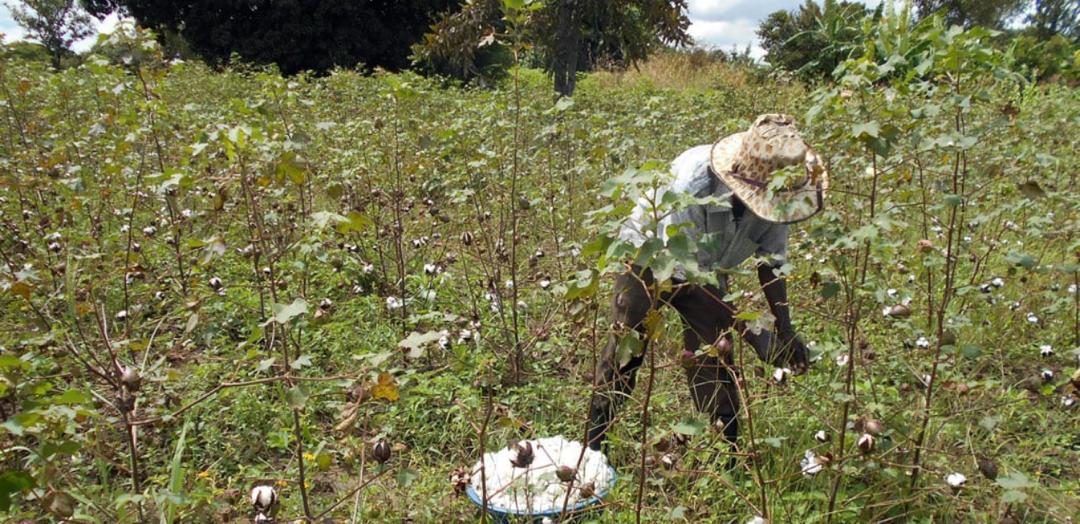
The multi-billion-shilling Pajule Ginnery project in Pader District is facing deep uncertainty following the government’s decision to merge and rationalise several agencies, a reform intended to improve efficiency but one that has slowed projects previously overseen by the Cotton Development Organisation.
The government began its restructuring drive in February 2021. One unintended consequence has been the delay of projects now shifted to the Ministry of Agriculture, Animal Industry and Fisheries, including the Pajule Ginnery, a seed processing plant valued at Shs20 billion whose construction began in 2015 under a four-year contract.
By mid-2024, Shs5.96 billion—about 35 percent of the project funds—had not been released, leaving major components incomplete. Work on the multipurpose hall and offices, dining hall and fuelwood kitchen, main store, external works such as drainage, landscaping and driveways, and a planned mini fuel station has stalled.
To maintain limited operations, the Cotton Development Organisation has relied on makeshift seed cotton stores and a temporary processing partnership with Rwenzori Cotton Ginners Co. Ltd.
Under the arrangement, CDO technical staff run the machinery while the private ginner supplies consumables including fuel, lubricants, spare parts and electricity.
According to the Ministry of Finance’s 2023/24 Vote Performance Report, CDO produced 64,147 bales of lint by mid-2023, of which 5,156 were consumed locally, and processed 2,107 metric tonnes of fuzzy seed for planting in 2024.
But Auditor General Edward Akol reported in December 2024 that the private ginner had sold seeds directly to farmers at Shs3,000 per pack, contrary to an MoU requiring that all processed seed be handed to CDO for distribution.
“This implies that the ginner is using a government facility without any returns to the state, despite heavy public investment,” Akol said.
He further noted that the Pajule project stalled after the Ministry of Finance removed it from the Public Investment Programme, cutting off essential funding.
He recommended that the Ministry of Agriculture review the temporary arrangement to ensure the state benefits from its investment.
By June 2024, CDO’s buffer fund stood at Shs28.1 billion in physical lint stocks and work in progress. Akol warned that transitional uncertainty may limit ginners’ access to this buffer, potentially disrupting the broader textile sector.
Local leaders in Pader have expressed growing frustration. Pajule Town Council Chairperson Brilliant Okello said the stalled facility has demoralised farmers and undermined cotton production.
“We visited the ginnery and found machines lying idle. Workers were not being paid. When we invited officials to explain the challenges, they never showed up. It’s a total mess,” he said.
Ministry of Agriculture Commissioner for Communications Connie Acayo said efforts to address the challenges are ongoing.
“Fixing the problems is a work in progress. Procedures for releasing government funds are being followed, and funding will be released at the appropriate time,” she said.
Although Parliament passed the RAPEX Bill in October 2024, which affects the Cotton Development Organisation, CDO has yet to receive transition guidelines from the Ministry of Agriculture or the Ministry of Public Service specifying when the new law will take effect and formally dissolve the agency.
With millions already invested and critical infrastructure incomplete, the future of the Pajule Ginnery now depends on swift government action to resolve funding gaps, clarify transition rules and restore confidence among cotton farmers and industry stakeholders.
